The Aerial Horizon
Forget where your feet are and simply enjoy the view.
Rounding ‘The Big D’
 As we round the “Big D” we look upon its myriad highways as a funnel directing our view from the broad periphery to the tightly spaced roads that pass through the high-rise office buildings of downtown Dallas. Then, changing orientation from the diagonal of the city to the grid work of the suburbs, the straight-line roads guide our view toward the earthly horizon as it fades and blends with the sky. The aerial horizon with its vague and dreamlike definition reminds us that, regardless of how flat we perceive our landscape to be, no matter how we attempt to follow straight lines across the plane, we are always floating on the surface of an imperfect edgeless sphere on the edge of space.
Folds of Earth Along the Basin’s Edge
 North of Rock Springs, Wyoming, the sepia toned plateau drops off in folds of rocky draperies striped in sedimentary layers with tight wrinkled balls of fringe until it meets the basin below. There the dry creek beds mark the path of erosion following the water’s path to the low point where it slowly evaporated and was absorbed into the earth.
Sunset Through Showers

Storms Dissipate over the Everglades at Sunset
In a sky that has largely receded into darkness, the bright orange sherbet glow of the illuminated showers guides us beacon-like around the wall of storms to the North. As the storms dissipate over South Florida, their tops loom heavy and dark, framing the sunset as it penetrates showers over the Everglades. In contrast to the rest of the sky, the water vapor in this frame is so colorful and luminous that it seems to have been created in a different medium. Turning away from the sunset as we make our way North, the light rapidly disappears with only hints of the sunset’s glow seeping through the heavy weather.
A Window on the Heavens

Steering for a Hole
We exist in an abstract moment in time where we hemstitch the line between day and night while simultaneously encountering powerful, ominous walls of utterly dark skies and brilliant, awe-inspiring windows on the heavens. We flit from the intensity of problem solving moments to the meditative solace of flying into a celestial scene that is beyond our comprehension. In describing this moment as abstract, I do not mean ambiguous or unexplainable…instead, my sense is that while we may easily explain the phenomenon that we witness out our windows, the intensity and connectedness of these worlds and our place in them are beyond our comprehension. To enjoy it as one may appreciate abstract art is the best answer…we do not need to comprehend it in order to appreciate how it makes us feel. An adrenaline rush and a soothing calm at once consume our bodies as we move through these moments and enjoy their fleeting nature, knowing that in a few short hours we will return to earth possessing a secret that is beyond words…but we will reflect on these moments, looking toward the aerial horizon in our memories and we will smile with satisfaction. These are my favorite moments in flight.
A Rainbow Forms
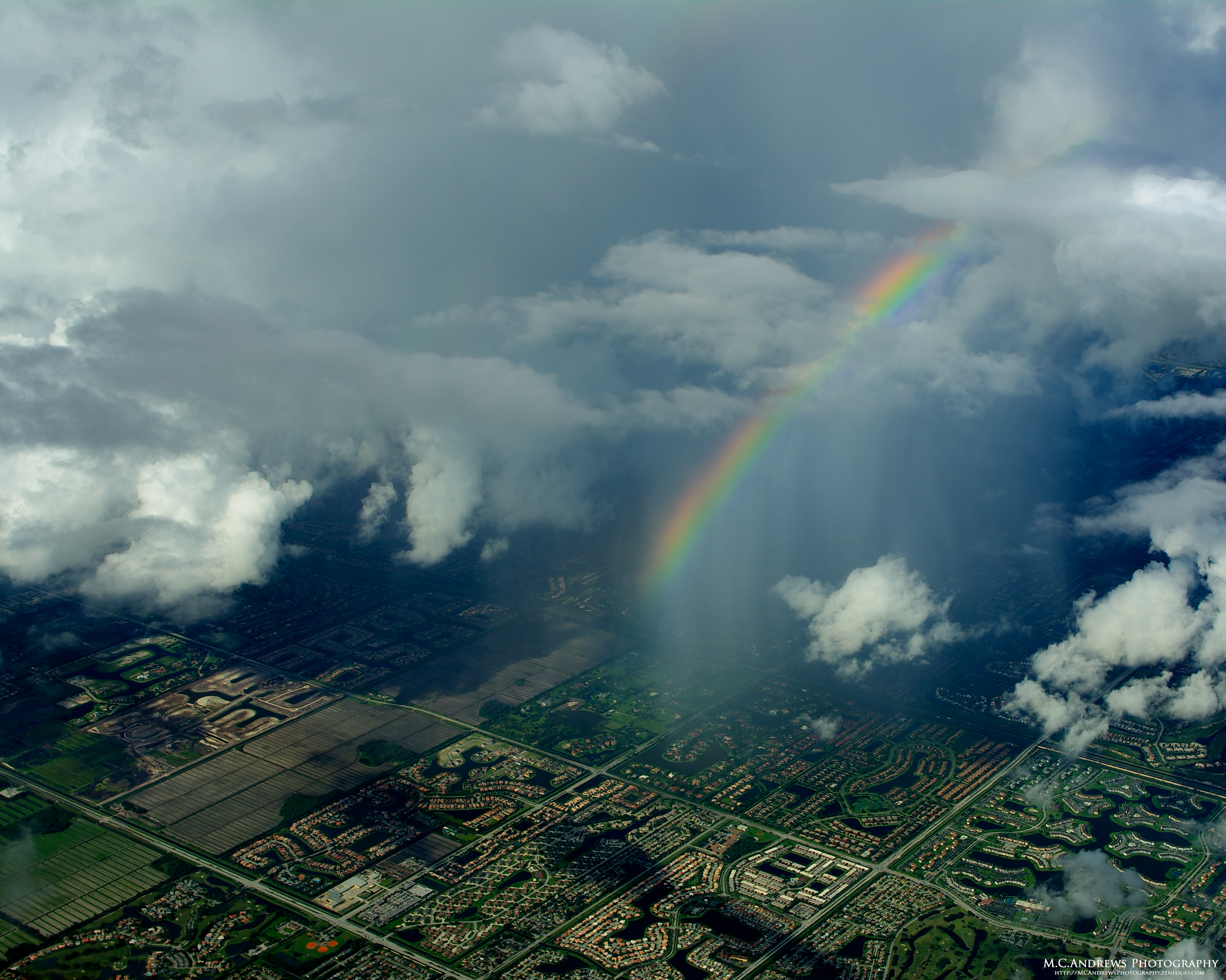
A rainbow forms in a narrow sweeping shower over Boca Raton
As we work our way around afternoon thunderstorms in South Florida, our sense of the air is at its peak. We are in tune with the waves of turbulence and the edges of the storms as we work radar, visual and the seat of our pants to find the safest path through the storms. This is the nature of working in the summer air and it can be as exhilarating as it is challenging. Once we arrive on the sunny side of the weather, it is time to look for our reward…Behind us, a rainbow forms in a shower as it sweeps across the planned neighborhoods and country clubs of Boca Raton. Starting as a glint of light in the criss cross of angular sun rays and vertically waving showers, the rainbow grows and stretches into a full blown arching bow. This was a great one…intense, bright and a fully defined spectrum of light. Next time, I invite you to lift your window shade, look outside, and share in this reward.
Reverie Beyond the Lights

A Window on the Grand Tetons
 As we drift in and out of layers of mid-altitude clouds, we are resigned to the weather and the absence of scenery. We examine our charts and see that the Tetons are beneath us and, hoping for a glimpse of the mountain range, we scan the horizon for a hole in the clouds. As we pass over the Palisades Reservoir, our path aligns with a break in the clouds as if a window opening on a new world. We have seen these mountains in famous photos taken within the park and from the banks of the lakes on their eastern face. This view is different. These mountain peaks do not dominate the skyline as they tower over the earthbound viewer, but they do pop out of the of the landscape. As they do this, they take our flat dimensionless perspective and make it pop in three dimensions. The more we gaze at the peaks silhouetted on the lake below, the more entranced we become. These mountains speak to us, they announce their presence with authority and they scream “look over here!” A few minutes later, we are gone, the window closes and the peaks of the Grand Tetons are emblazoned in our memories where they stand stoically awaiting the next break in the clouds.
Zen Gardening on a Grand Scale
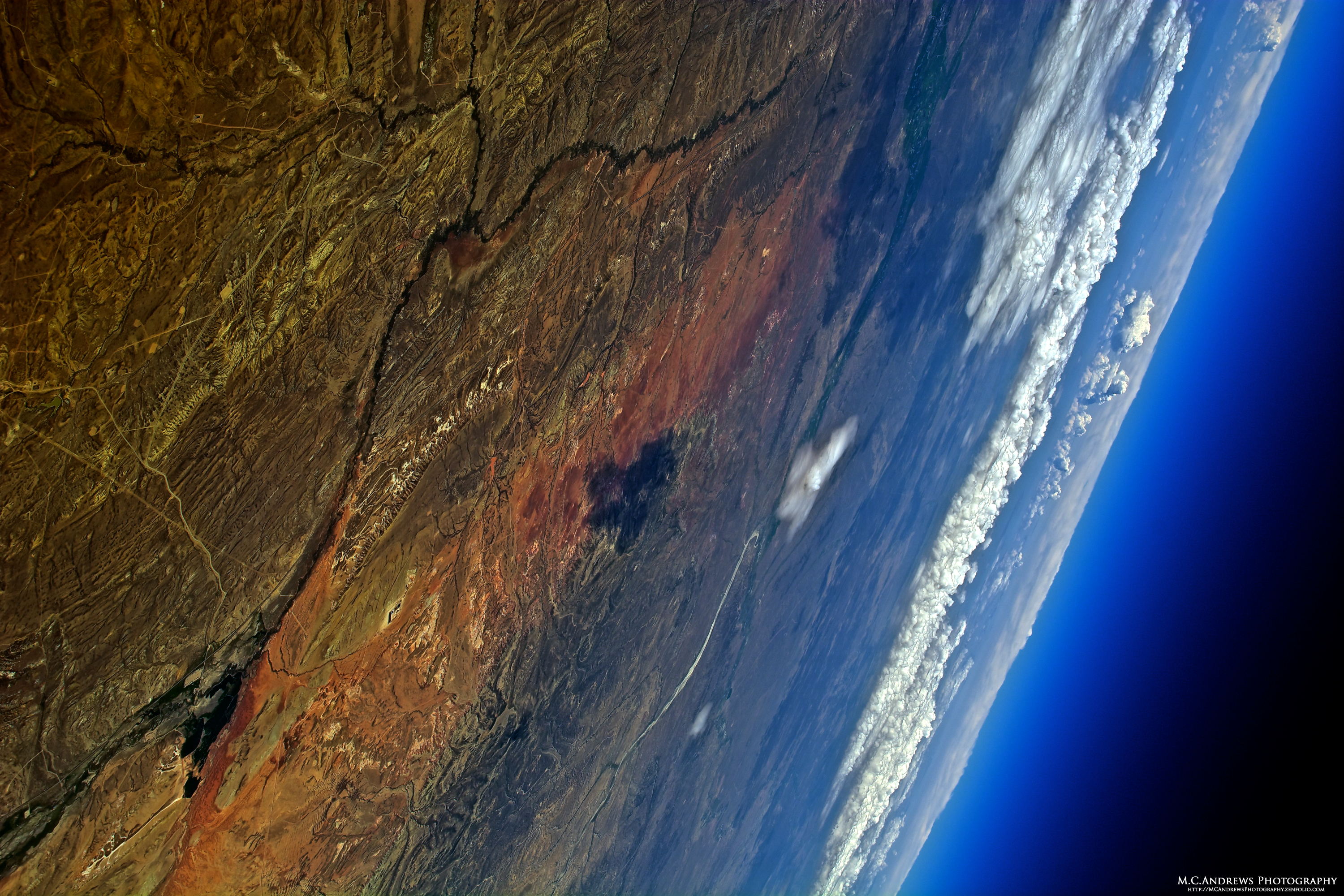 Following the many graceful lines of earth as they wave rhythmically across the desert landscape…The well raked lines created by glacial movements and erosion flow around islands of raised and recessed earth, following the contours of hills and sedimentary pools of colored sand. The Red Desert of Wyoming serves as a source for meditation as if it were a grand Zen garden carefully raked for our thoughtful meandering.
The Current of the Desert

Crossing paths with Ship Rock as it steams across the desert; the current of the desert flows in great ripples of painted stripes. The wake, born from the motion of magma, continues to fan out from the fixed motion of the rock as it moves across the landscape. Drawn by forces of nature, its earthen illustration conveys movement where nothing truly flows but sand in the wind. This is a magical place of color and energy drawn on a canvas of perpetuity.
Boundaries

Cottonwood Canyon and the Grand Staircase-Escalante National Monument
As we pass overhead the Grand Staircase-Escalante National Monument, we follow the Cottonwood Canyon southward toward Glen Canyon and the Grand Canyon at the horizon. Each canyon in its turn provides a boundary that limits or guides our perspective. To the observer on the ground, these great canyons are obstacles that must be circumnavigated. From our aerial perspective, while we may imagine the plight of the pioneer at meeting these obstacles, we see these canyons as something greater…they define boundaries of flowing pathways across the surface of the continent and act as guides to interpret the movement of water through the landscape created by flowing molten earth. Meandering through once mild ripples in the earth’s crust, the water’s movement grows more erratic and dramatic as it cuts deeper into the crust to reveal the soul of the landscape.
Emerging into a Dream
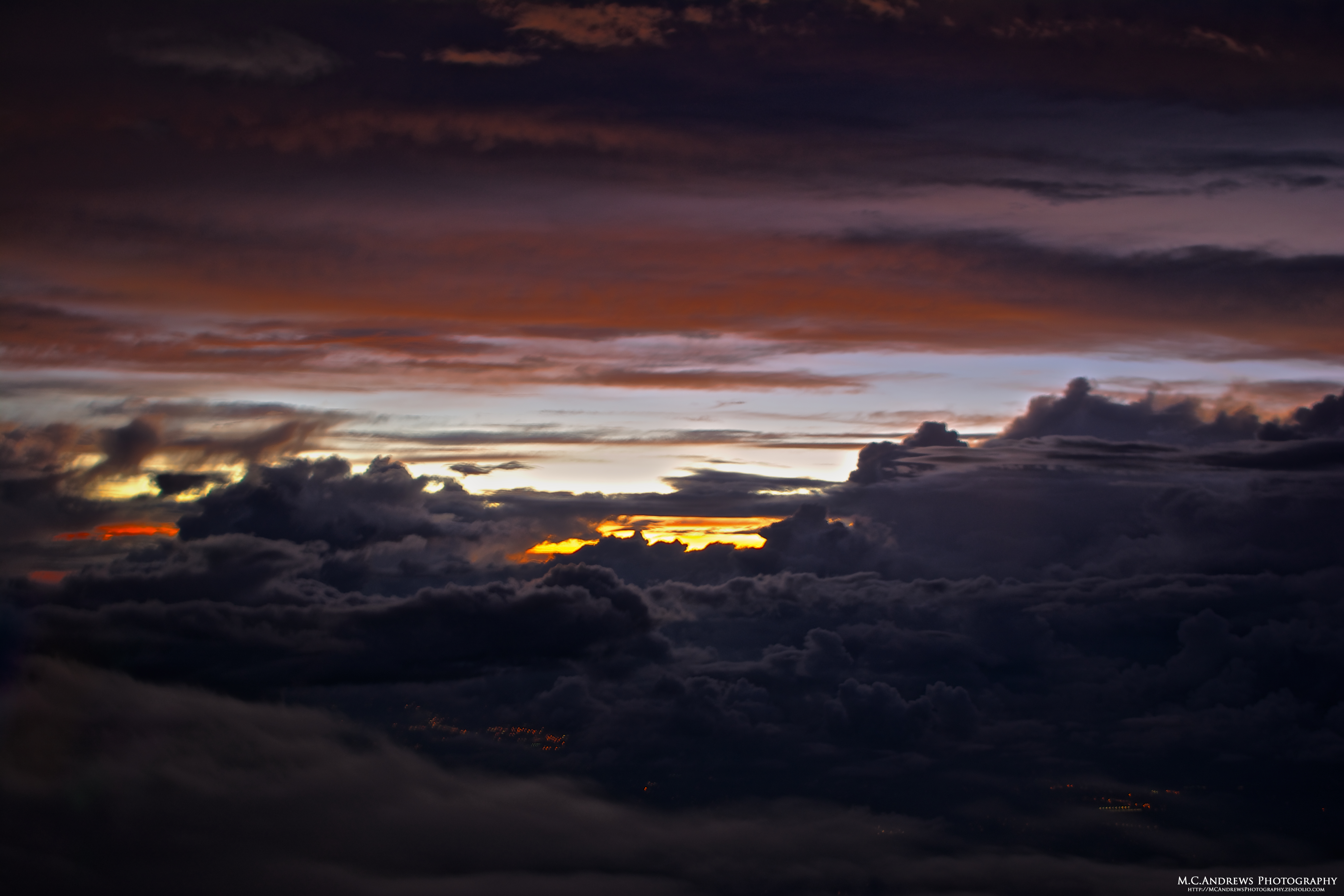
Emerging from the depths of a storm (into a dream)
As we are bounced around in the shadowy and turbulent depths of a twilight storm, it seems that the day is done and our senses are resigned to the utter blackness of the storm. A few sharps turns around the core of the storm followed by a sudden down draft and we emerge from the storm to witness a dramatic and dreamlike cloudscape. The setting sun casts light through the misty wisps of vapor and backlights the dense cumulous clouds. This same stream of light is reflected off the overcast layer above us…the combined effect of the backlighting and reflected light creates a misty warm plum colored sky that draws us in and invites us to leave our memories of darkness and turbulence in the clouds behind us as we pursue the retreating sun. Finally, we descend below the horizon to make our approach to Atlanta and the scene silently fades into our dreams.
The Amorphous Maze

Stepping through a portal in an ever shifting amorphous maze of sky.
Working our way down the East Coast in Summer, we feel more as though we are wandering a great labyrinth as walls of cloud present obstacles to be navigated. Our weather radar is a tool that can help us makes choices, but the information is constantly changing…not unlike the choices we make in our lives of constantly changing circumstances. We use the best information we have at the moment to make the best choice among those presented to us. Do we go left? Do we go right? Should we stay the course? On a normal day we make the simple choice, deal with the consequences and move on. However, on a day like today, we are in the labyrinth and we must make choice after choice as we inch our way southward. At every turn we are presented with new information; sometimes we accept it based on faith, faith in technology, or the reassuring power of realtime observation. As we look behind the wing, the gap we passed through closes behind us and we are driven on our path. Ahead of us, a portal opens to our perspective and we step through it. As we pass through, we see our path framed by current circumstance and the afternoon light casts its golden light down our course as if illuminating the path through this ever shifting amorphous maze of sky. This is work, but these momentary vistas are ample reward for the effort. [The fly speck at the top right is another airplane that had the same idea and crosses our path in this portal.]
Sweeping Lines in the Mojave
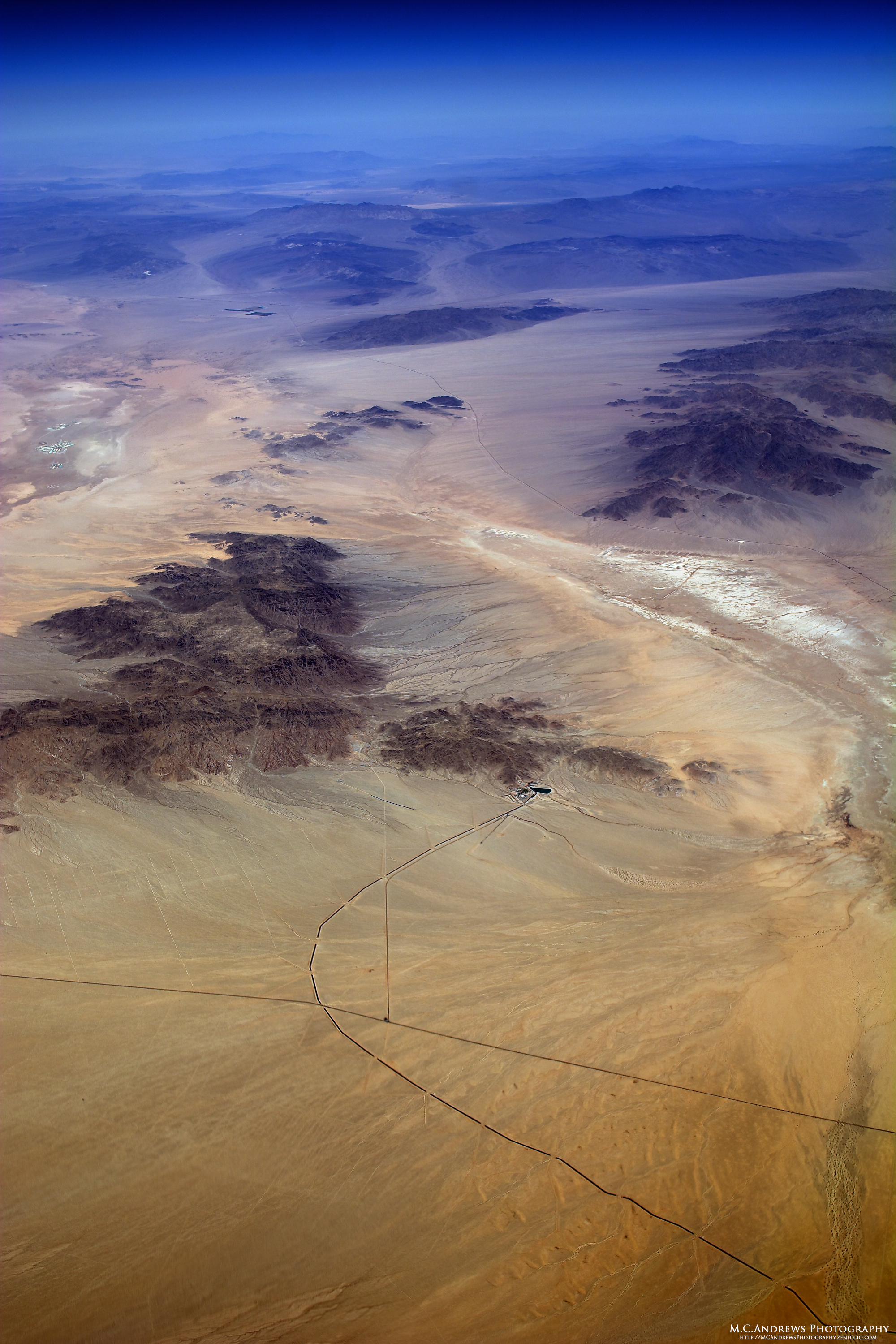 At the foot of Iron Mountain in the Mojave Desert, a thin reflective line winds down the gradually sloping terrain toward its source at the Colorado River. The sweeping line blends with the visual flow of the desert terrain winding between dunes and mountains and following and intertwining with the worn pathways of naturally flowing water. The reflection is from the surface of the water that flows through the Colorado River Aqueduct supplying water to Southern California from the Colorado River. The Iron Mountain Pumping Station lifts the water over higher terrain and ensures a steady flow of water across the desert.
Below the Horizon
You may occasionally see a post that doesn’t seem to fit the theme of The Aerial Horizon…Generally, these are the result of fat-fingering that I quickly attempt to remedy… But if you are interested in photographs that I shoot below the horizon, please visit my other blog at http://imaginingthetrail.wordpress.com
A Moment of Awe
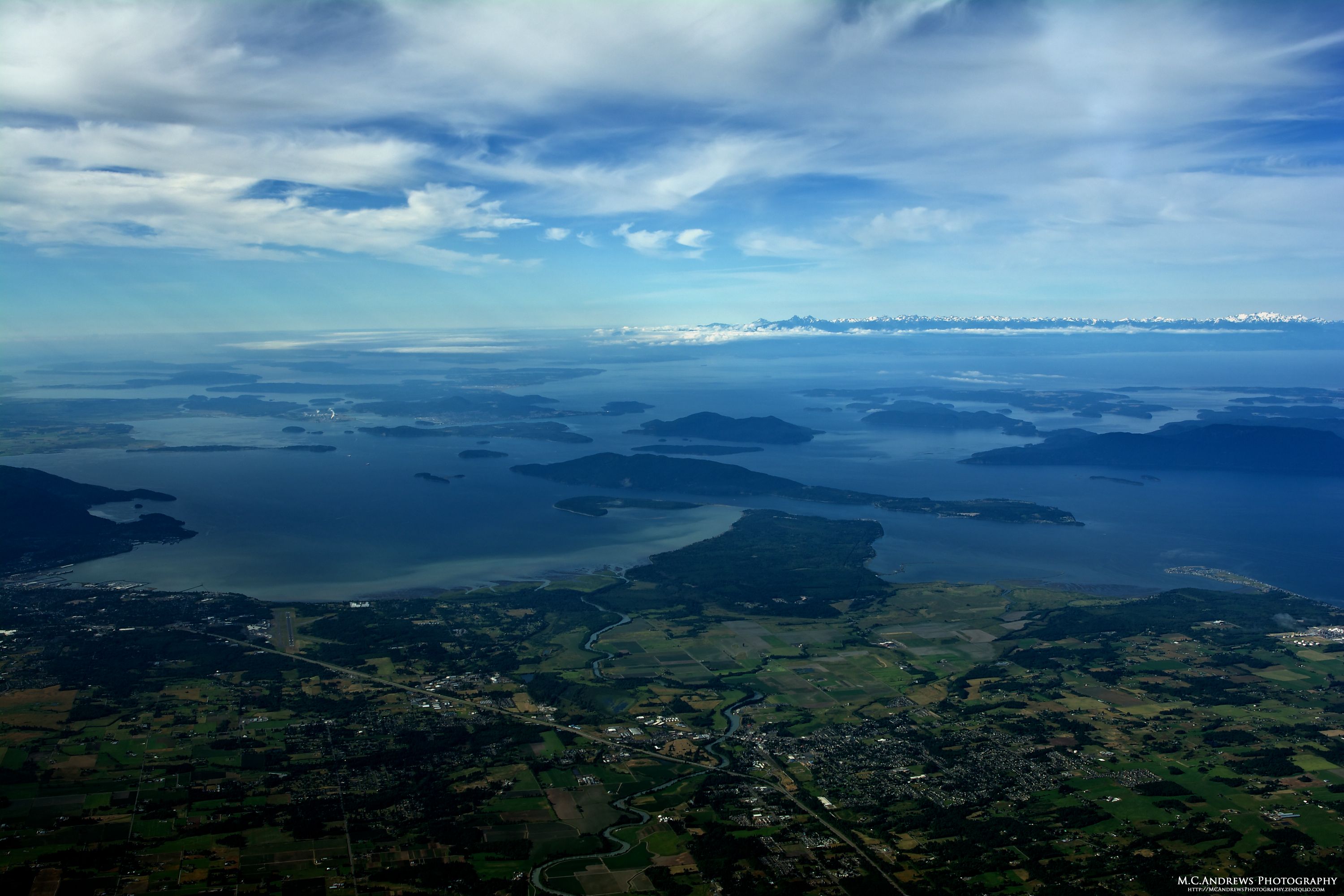 As we rise above the blended scenery to see its many pieces laid out in front of us like a glorious disassembled puzzle, we share a moment of awe. No longer do we look at the features of the horizon as a singular mass; instead we see the shapes and mystical character of each element that defines the coastline. We drink our morning coffee contemplating the scene overhead the Lummi Indian Reservation. First, we take in the rectangular block of forest that juts into the sound like a diving board from which to launch into the sound. We gradually walk our gaze toward the hook shaped Portage Island and the lanky Lummi Island beyond. As we work our way across the San Juan Islands, we see the mountainous character of each swath of land emerge from the morning’s mist. Finally, our eyes rest on the horizon where the white-capped mountains of the Olympic National Park contain our view and keep our imaginations from slipping out to sea.
A River Runs Through It…
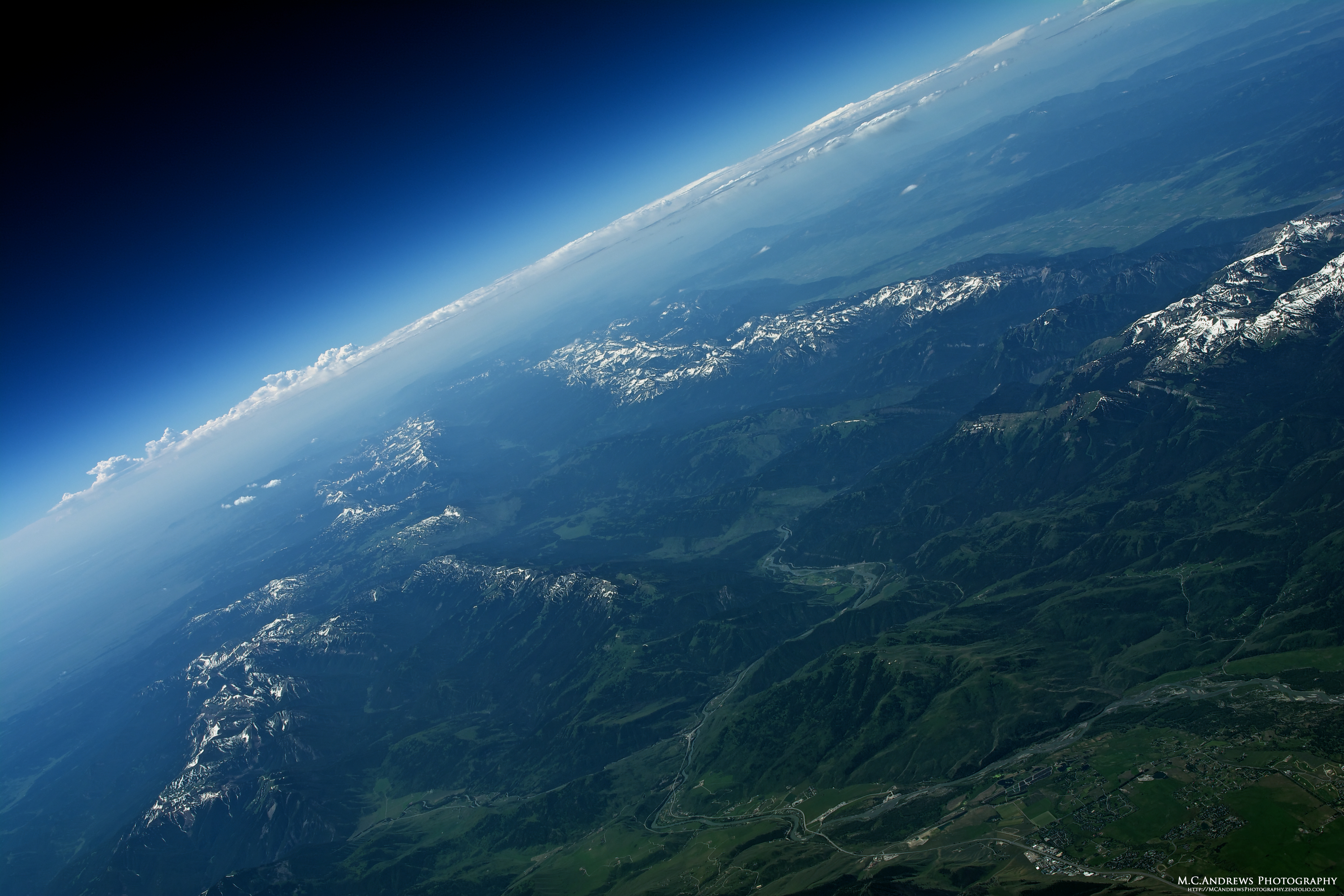
A borrowed title perhaps, but it seems the best way to describe the scene of the Bridger-Teton National Forest as we round Jackson, Wyoming. The Snake River penetrates the Tetons as it winds southward and then cuts west toward the Palisades Reservoir. The river, like so many signs, unlocks a pathway for us to follow. It leads us into the landscape and once we are consumed by the vista, it loses us amid the hills. Knowing when to follow signs toward a path is important, but half of the fun is in discovering where the path leads us when all the signs have disappeared. The wilderness bursts forth from the landscape and we enjoy getting lost in the energy of the scene.
Approaching the Divide
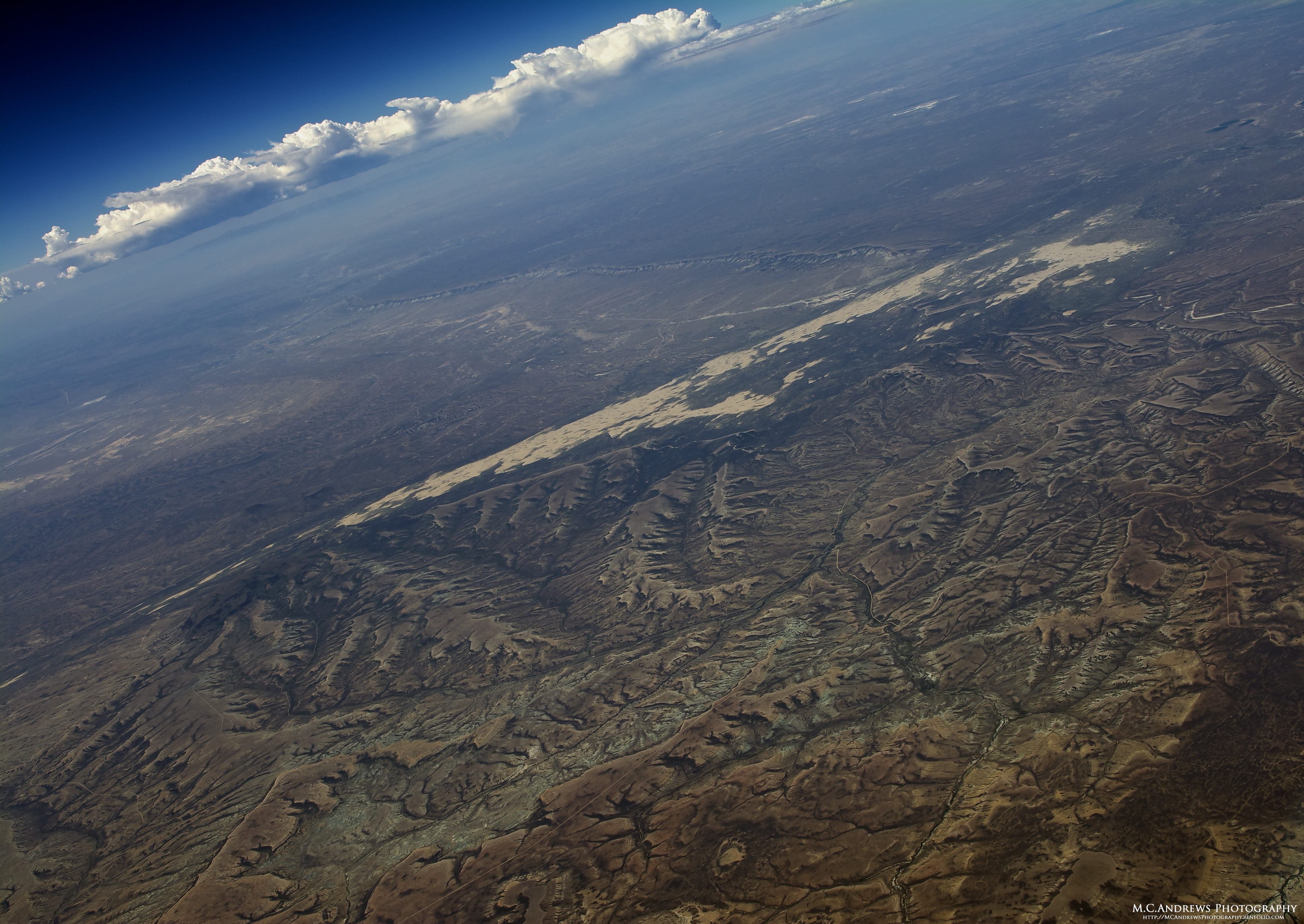 As we approach the Continental Divide, we reach the southernmost foot hills of the Tetons where the ridges fall off and scatter in disarray. Essex Mountain provides a last pinnacle overlooking the Killpecker Dunes, beyond which the Great Divide Basin spreads out like a dry ocean floor. Its appearance may be the result of its nature as an endorheic basin into which rain falls but instead of running off, it drains directly into the earth. The landscape of the basin is pockmarked and ringed by the slowly draining and evaporating water.
A Perfect Place to Land
 Turbulent skies above cloud covered mountains make us think of inhospitable terrain below…until the clouds part to reveal an idyllic pastoral scene. Jackson Hole, Wyoming appears nestled between the dramatic jags of mountain ridges and provides a peaceful sanctuary amid fields, lakes and streams. Our eyes immediately are drawn to the Jackson Hole Airport at the base of the Grand Tetons, the focal point of the valley. This would be a perfect place to land…and spend a lifetime.
Following the Columbia
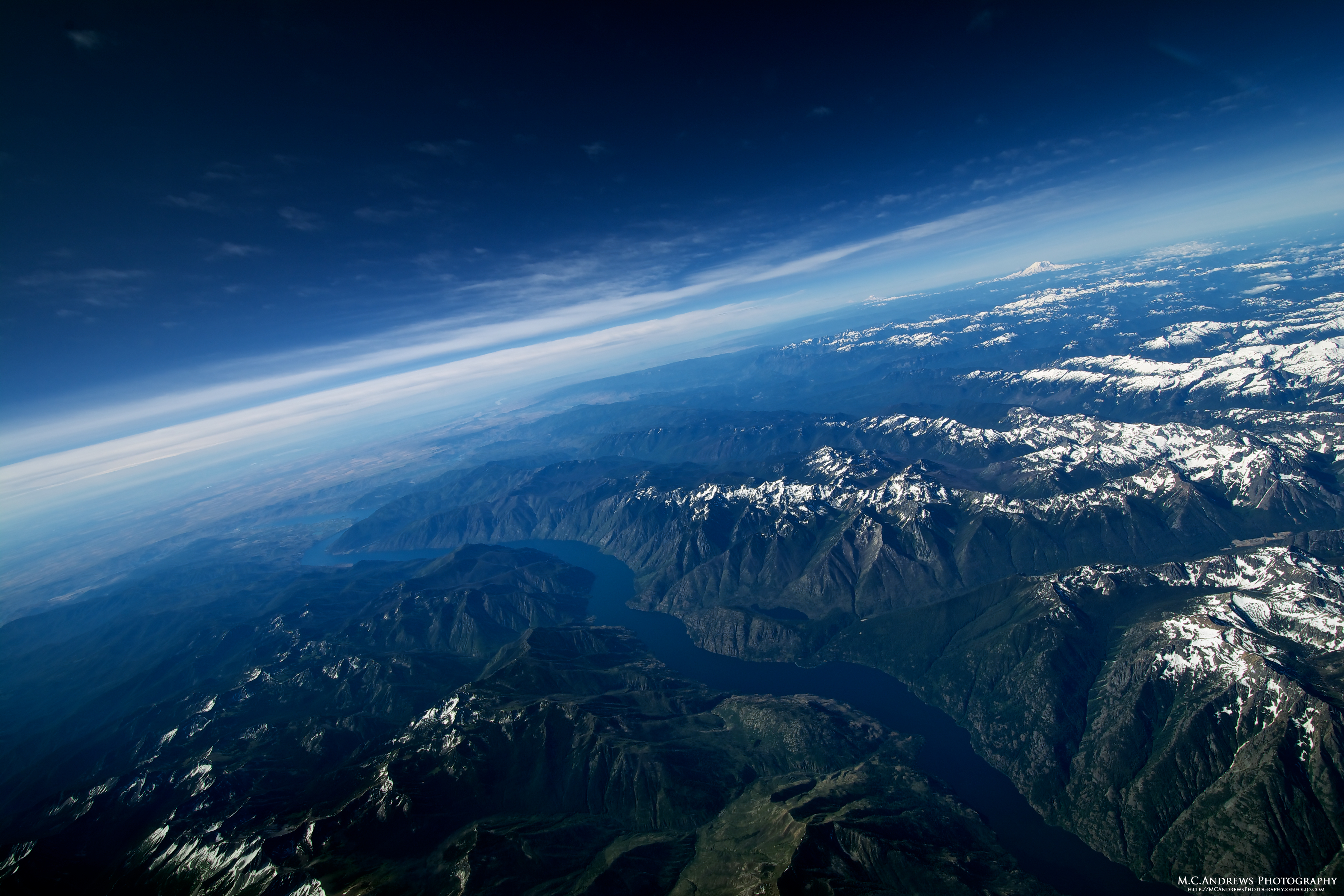
As professional pilots, we are accustomed to working on holidays, birthdays and myriad other occasions. We may feel especially distant when we are in far off lands where our traditions aren’t recognized. But once we get in the air, each day is a special day and surprises await beyond the horizon that make each day unique. We may lament the missed holiday, but we focus on our task of moving metal and people from place to place and barely give the day a thought until we return to earth. I began my celebration of (American) Independence Day in British Columbia this year with the silent statement of pride expressed by wearing a Sons of the American Revolution rosette on my uniform lapel. As we climbed out and into US airspace, I was overcome by the beauty of our land as seen by someone returning from afar (perhaps not so far this time). As we turned south, my eyes followed the Columbia River south of the Grand Coulee Dam until it turned toward the west. Mount Rainier loomed large like a great monument pinned to the horizon. The beauty of the Columbia lies in its expression of natural independence as it flows through the terrain unfettered, seeking its course and carrying the fortunes of man toward the Pacific Ocean beyond the horizon. Exploring the American landscape with our aerial perspective is a true gift and cause for constant rejoice…then we return to earth and readjust to the world of our earthbound friends… watching firework rockets and dreaming of being up in the air.
Anticipation
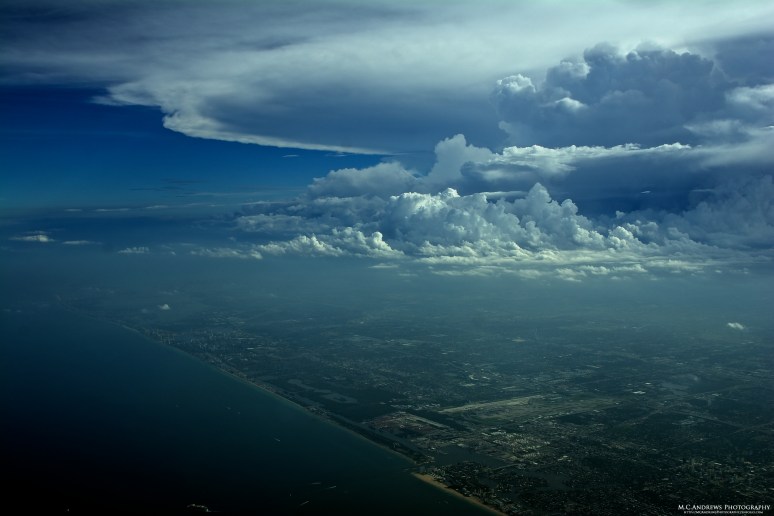
Looking at Miami International Airport (where it is supposed to be) from our off shore vantage point, Admiral Boom’s words come loud and clear into my head…”A heavy bit of weather brewing there…” However, for us there is no admonition to steer clear of the weather. Our destination is set and time is of the essence. We keep the speed up and head for the field, ducking under most of the weather along the way. Turning short to final and landing with rain on our tail, we safely taxi clear of the runway as the storm hits the field and the light show begins. Summer storms can be impressive and they get more interesting as we move closer to the equator. From a distance, they are beautiful living things that churn, rise, billow and fall with explosive energy. Up close, they are ominous sources of darkness and destructive energy. Whether on the ground or in flight, they are to be revered. Now that Summer is here, it’s that time of year again; it’s time to double-check the weather, it’s time to anticipate the coming storm, and it’s time to have plans B and C ready to execute when wisdom and prudence help us to put things back in perspective.
The Aerial Horizon – Photography

 The Aerial Horizon