The Aerial Horizon
Forget where your feet are and simply enjoy the view.
Changing Perspectives
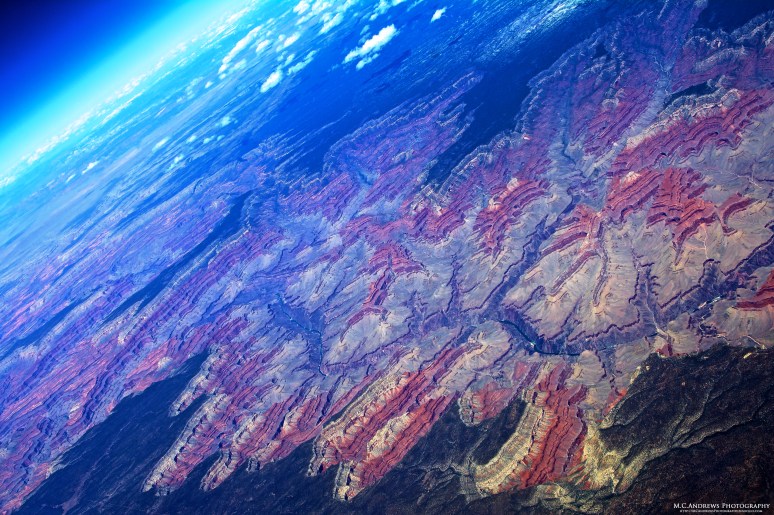
The amazing thing about the Grand Canyon is not so much its vastness, instead it is that there are so many different facets to this cutting of stone that it takes on a different appearance with every change in light and perspective. From our perspective, we see the North Rim and the South Rim of the canyon simultaneously as they frame our view of the canyon. We follow the bright green ribbon of the Colorado River through the depths of the canyon that are unseen by our friends whose feet are tethered to the ground. On the South Rim, Hermit Basin and Yuma Point frame the focal point and provide us a reference as we wander up the canyon. From this vantage point we can see the topographical layering of multicolored fractal ridges that provide the color and sense of depth to the vistas seen from the rim.
The Navajo Highway
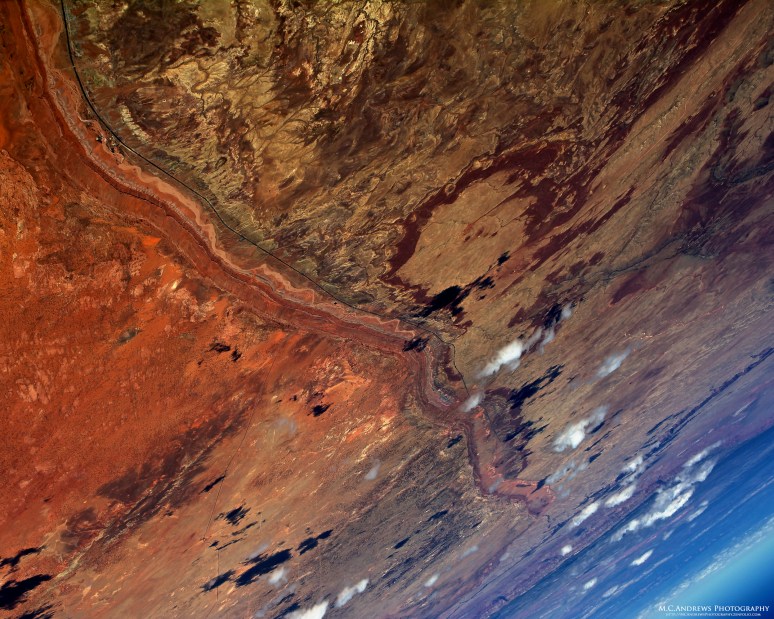
Taking an abstract perspective on the Navajo Highway, we forget the dust of the road and focus instead on the patterns and textures of this path. Instead of cutting through mountains and making the landscape conform to the path, the highway goes with the flow of the landscape. It’s appropriate that such a road leads us toward Monument Valley…a testament to an ancient flow of drifting plates and volcanic activity. From upturned edges of the earth’s crust we get momentary glimpses of the layers of age stacked across the desert plain, each ripple and wave of color demonstrating the natural flow of earth, wind, and water. This place calls to me and stirs my imagination to dream of what it must be like to have my feet on the ground wandering this path.
Night Lights and Milky Way

The joy of flying the red-eye is that we get to chase each new star as it rises in the East while racing past the lights that dot the landscape. The chase never ends and the race is always won. But what we don’t always get to see, unless it is very dark, is the Milky Way. Last night, the Milky Way expressed itself so brightly that it looked like a cloud bank we could reach out and touch. In this photograph, a portion of the Milky Way appears high above the horizon to the southeast while the lights of the Panhandle stretch across the dark landscape and reflect off our nose.
And now for the technical…A very slow shutter speed (20 seconds) at an aperture of f/1.8 was required to capture the cloudlike appearance. We were traveling at roughly 8 miles per minute. With a little simple bar napkin math, we can figure out that the lines of light from fixed sources on the ground are each about 3 miles long… fascinating, I know… and now it’s time for bed.
The Grand Canyon Inside Out
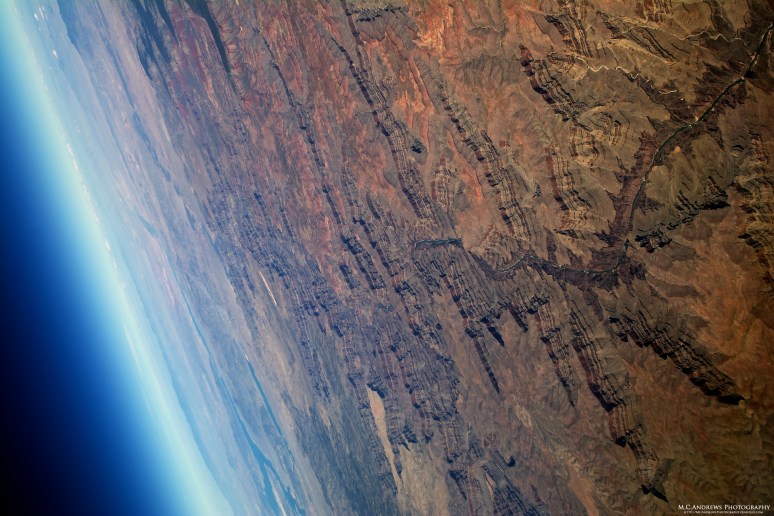
Once again forgetting where our feet are to appreciate in full what we see on earth. We round the Grand Canyon and our new perspective draws our attention to the horizontal lines of age and wear on the canyon walls. As we look deeply into the lines, we are pulled into the scene and it begins to flatten and invert…it turns inside out. The lines protrude, rather than recess, and the river is lifted from its depths. In this moment the entire canyon appears as a grand abstraction.
Stepping Beyond Burning Mountain
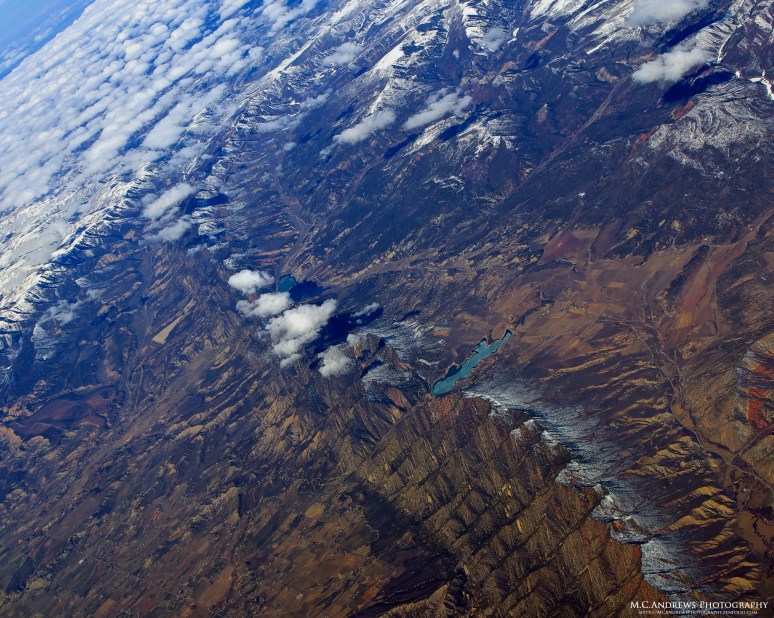
As we travel westbound from Denver, the ridgeline beneath us takes on the look of steps as it gently winds toward the northwest. The colors of the layers of stone accentuate the effect and the uniformity of the peaks appear as though intentionally stacked. The most visible and intriguing colors line the faces of Burning Mountain. As we follow the ridge toward Rifle Falls, the aqua surface of Grass Valley Reservoir stands out against the umber terrain.
Distraction

The Grand Canyon lurks somewhere below the clouds. We know there’s something big out there, but we can’t see it through the chaotic churn of the day. We yearn to see it, we imagine it, yet it is still obscured. Now matter how thin the obstruction, we are distracted from our purpose. Ironically, our purpose may not be what we suppose.
Imagine if the why of our existence were not to see the great sight. What if our purpose were to appreciate the distractions? We could stop searching and begin to appreciate the wonderful flowing and chaotic nature of the world around us…and we would not hide from it or avoid it…we would experience it. Forget crossing the turbulence of a swelling stream…jump in and appreciate the energy and the flow.
Accepting the idea that our spirits have a path to follow, but recognizing that our earthly experiences shape our destinies, we may come to understand the flow. The flow is physical, as in physics…Our spirits represent an energy driven by a venturi force that responds to pressure with velocity. When we are squeezed by pressures and situations, we respond with velocity to deal with the new dynamic. When we feel no pressure, we are at ease and we wander freely searching for meaning.
We live in a fluid world of atmosphere and H2O yet most of us are unaware of our relationship. The aviator knows this, though he may not reflect on it. Flight grants us an insight into the freedom and purpose of our spirits. As we move through the atmosphere, we are free. We may struggle with adversity to meet our goals and achieve our destinations, but we are at our best when we respond to the forces around us, appreciate the wonder of what we can see, and cease to be concerned about finding what we think we should see. When we look out the window and ignore that fact that the Grand Canyon is obscured (again), we start to realize just how beautiful the clouds are as they convey motion in radiant beams of light….Perfection is the here and now; it just rarely looks like the perfect we expect to see.
Shifting Canvas
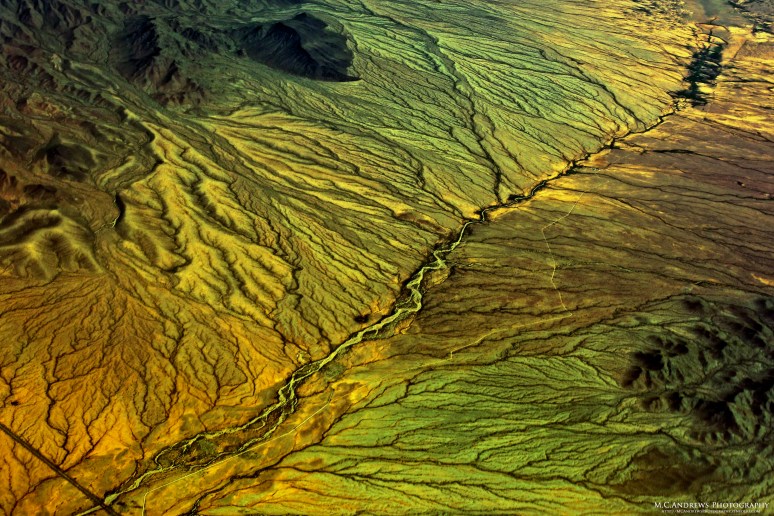
East of the Chocolate Mountains, in the spaces between ancient rock formations and volcanic remains the downward sloping desert lands are etched with lines. They emerge from everywhere and converge on creeks that lie nestled between the slopes. All dry today, but the paths are clearly marked for the water to follow when heavy rains come and this arid landscape is rapidly saturated. I have photographed this desert before as I fly over it frequently. Each time I study the lines beneath me, I see new designs as if the canvas has shifted and the artist has added new flourishes and brush strokes.
True image, color saturated and polarized.
Edifice

Perspective is an amazing thing. Depending on where you sit or stand, depending on what you know and how you think, depending on your experience…you and I may see something in such vastly different ways that we could not imagine that we were focusing on the same thing. But that, in part, is the beauty of perception and thus the beauty of our shared journey. We all bring different perspectives to bear and, gathering our perspectives together, we develop a better view of the world.
El Capitan Peak at the southern end of the Guadalupe Mountains stands high above the plain as a massive white edifice. Standing beneath this edifice, we observe its height and visual mass and it dominates our thoughts…an obstacle to be revered and circumnavigated. From the cockpit, at first we would agree with that view, but our perspective is rapidly changing and as we fly over the mountain, the landscape begins to flatten. This massive monolith planted across the plain slowly transforms into a single line of filagree adorning the earth as one element of a larger ornate design.
Quicksilver
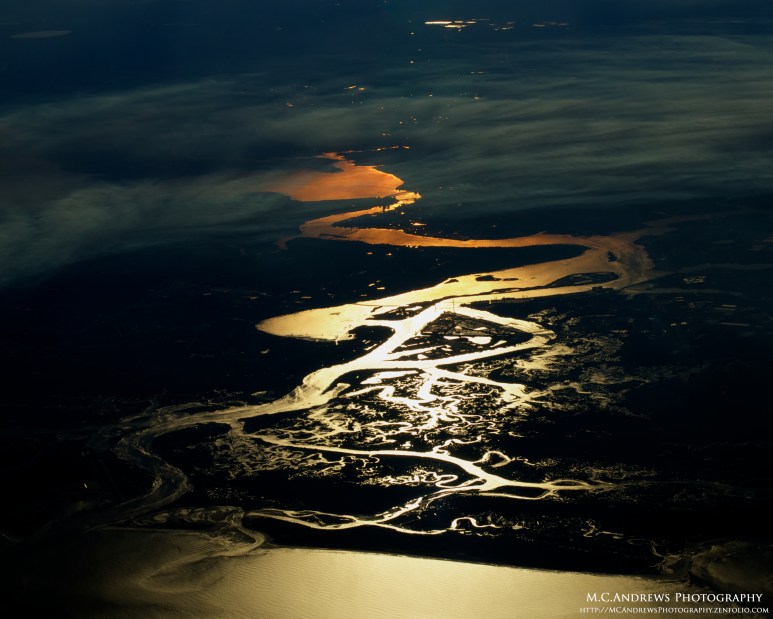
In those moments before sunset, when the sun is low on the horizon, the rivers and inlets of the southeast coast alight with the radiance of their reflections like veins of quicksilver running through the landscape. The blue green and brackish waters are transformed in these moments and they appear as an ornamentation on the coastal lowlands.
If we need a metaphor to help us appreciate this moment, we need not look too far. Our own paths through the landscape of our experience may effected by something deep in our nature or shaped by the world around us, just as the rivers flow with the force of gravity and the orbit of the moon. Yet through the sheer normalcy of it all, we have moments when we see the path for what it is. We see the beauty and harmony in following our nature. In that moment, as the reflective surface of water before sunset, we hold the light and radiate. The beauty of the path illuminates us and yields a sense of contentment in “just being.”
The Saint John’s River flows through Jacksonville, Florida on its way to the Atlantic Ocean.
Morning Light at Borrego Springs
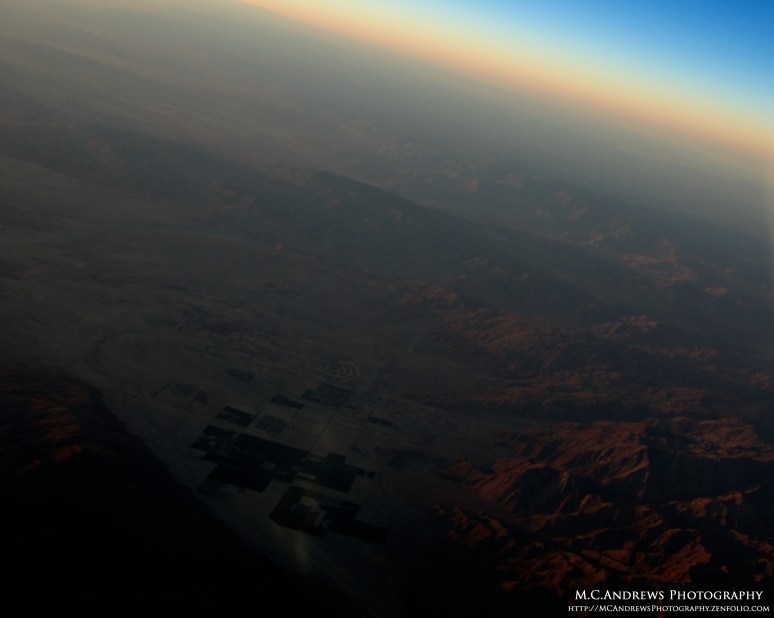
Morning light breaks on the eastern face of Hot Springs Mountain. The patterns of Borrego Springs appear etched in the misty shadows of the desert while the sun begins to illuminate the Anza-Borrego Desert State Park to the south of the Springs. Having departed the pre-dawn shadows of Los Angeles, this is our first glimpse of light. The amber hues on the desert mountainsides create a feeling of warmth as the haze of twilight begins to dissipate. It’s a beautiful way to start the day.
Imagining the Trail
I have started an additional blog on WordPress where you will find photographs from along the trail. The images featured in this blog reflect an earthly perspective on destinations and sights along the way. I hope you will check it out.
Lost and Found
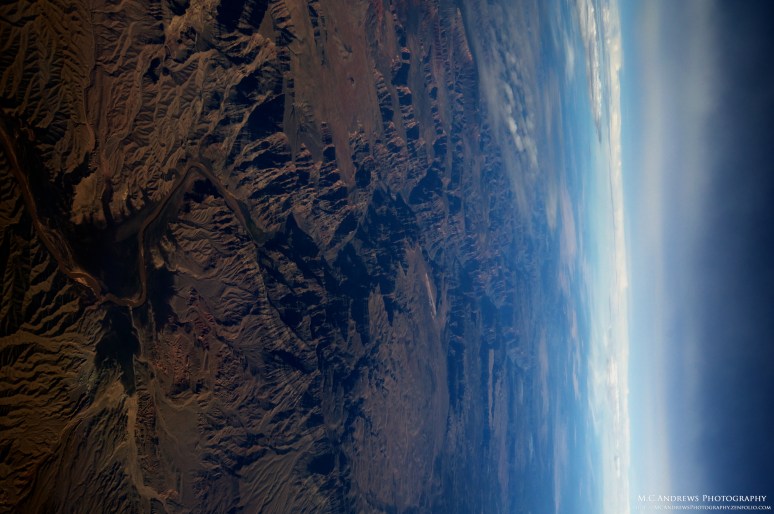
Sometimes getting lost can be the best way to find what is important. We all collect things… some physical, some mental, some real, some imagined. We weigh ourselves down with possessions, thoughts, and troubles. We don’t typically do this for a tangible purpose like the guy who gathers bottles from garbage cans so he can collect the deposits and eat tonight. Instead, we are compelled to be collectors by our nature. Perhaps it is to satisfy an innate need to gather in a world where we are unfamiliar with famine and true need. We do it and we don’t know why. But all of that can create an inexplicable stress..the result of cluttered spaces and cluttered minds…until it shapes our existence and takes control of our lives, denying us the pleasure of the the reality of the world around us.
If we don’t know how to take control, we can neither identify nor escape these burdens. This is when intentionally getting lost can help us find the way. It takes concentration and effort to get lost in this way. The problem is that when we try to get lost, our minds are thinking about the maze we are making and a map is drawn in our heads. Try it; try to take a wrong turn with the intent of getting lost…you may never get lost because your mind will always try to draw the escape route for you. Instead, try to focus on something so intently that other thoughts begin to fall away. If you do it right, you will start to reel and subsequently relax as a sort of self hypnosis takes hold. Now you are lost…and relaxed…and you can appreciate the beauty of this focus. All things become clear when we shed our clutter.
As we look toward the Grand Canyon, it rolls toward us with the rotation of the earth yet its immensity seems to stop time. Does this make sense? All the world around it is consumed by its dramatic void and we only see the canyon. Don’t get me wrong; we want to see the canyon because it is grand and beautiful and mysterious…it is beyond our comprehension. But if we focus, really focus, we can begin to get lost in its wrinkles, creases and scars. We can abandon all that is overwhelming and focus on the beauty of its elements. We may feel a warmth that comes from harmony with our environment…something that is wholly aesthetic. We can abandon questions and concerns and in that moment simply appreciate “just being.” At this moment we are decluttered and our minds may be prepared better to identify and tackle what is important.
Chihuahuan Desert and Ciudad Juarez
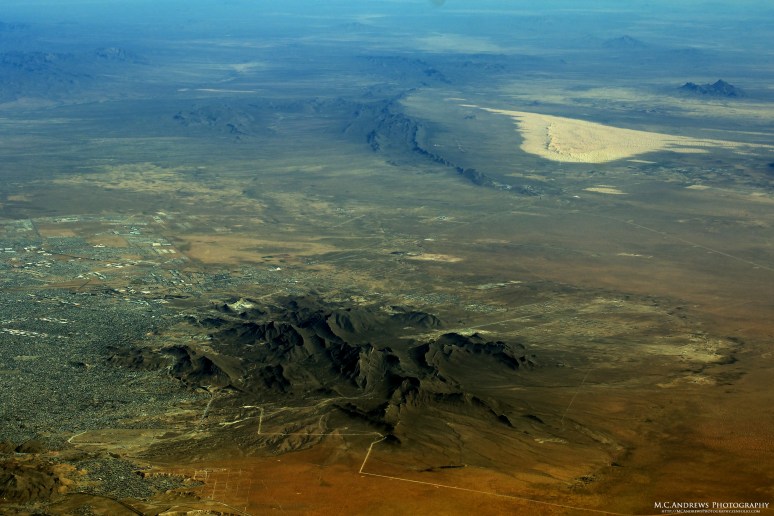
Great geological barriers to travel provide fuel for the imagination. Cerro Bola stands high above Ciudad Juarez, defining the landscape for the people on the ground with a visual barrier of jagged rocky peaks. From our perspective, we get a different view and the peaks look smooth and sculpted as if some earthly frosting on the surface of the desert.
Looking beyond the mountain we see Los Medanos, the Samalayuca Dune Fields. These dunes are an obstacle to earthbound travelers as they make their way north along the plateau to Ciudad Juarez. The whiteness of the sand dunes is due to the high concentration of quartz in the sand. Framed by the Eastern and Western Sierra Madre ranges, the Chihuahuan Desert occupies the Mexican Plateau. Interestingly, this high desert is one of the most biologically diverse places in North America.
Orion at Last Light

The lights of Phoenix illuminate its streets in the shadows of the evening and give us a sense of place as we travel westward. Above us, Orion appears brightly in the western sky though his quarry is still diminished by the last light of day. Taurus will appear shortly and return a sense of normalcy to our view of the heavens. In this moment of last light, the sunset becomes a mere sliver on the horizon and its light breaks to the individual colors of the spectrum. The green blur that begins on the southern end of our view is described by some as a green flash in the moments before the light fades away.
Though we all see the effect of the colors differently as the available light fades away, we may capture the moment in a photograph and study the various colors in the light. While this improves our understanding of what we see, capturing the moment in this way also helps to heighten our appreciation of the moment and its beauty.
Depths of Revery
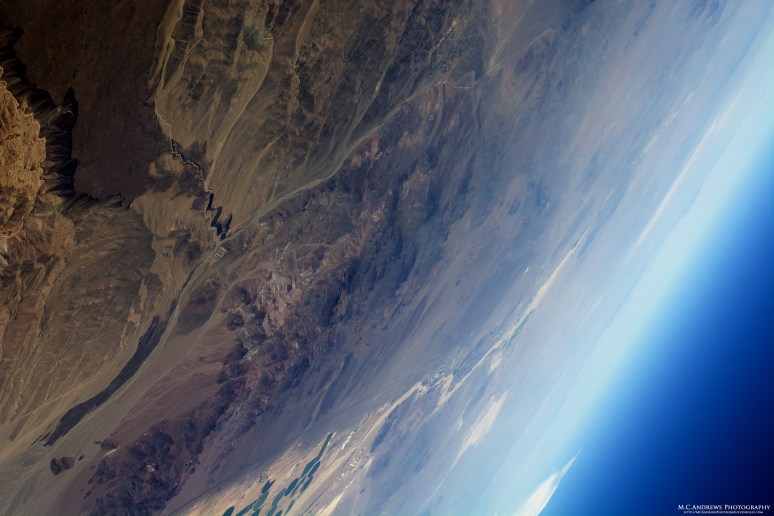
On the “road” from Vegas to LA, we look down upon the Newberry Mountains Wilderness. From the depths of the canyon where the mountains give way to lower terrain, we follow dry creek beds through the abstract landscape of our imaginations toward the misty vagueness of the aerial horizon. The earth is colored in random patterns umber as if dusted by ancient volcanoes whose shapes have eroded into the landscape.
Clarity
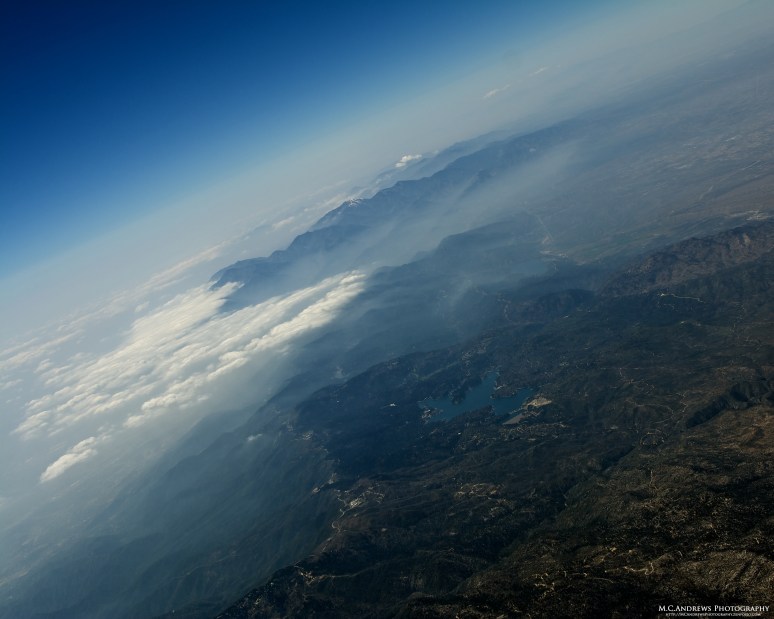
As we turn over the San Bernardino Mountains and we first see Arrowhead Lake clearly through the veil of mist, we transition from the vague reality of following a computer based course depicted in magenta lines to the reality of knowing precisely where we are over the face of the earth. The navigation systems work well, but there is no substitute for this crystal clear view of reality. Seeing is believing.
We all face obstacles when seeking clarity. A fog, a haze, a cloud, confusion, stress, or others may at one time or another prevent us from seeing clearly what we seek, or prevent us from seeing our current circumstances. We call it “situational awareness” (or “SA”) when we gauge how closely our perception mirrors reality. This is of critical importance to the aviator, but many people wander through life without contemplating that mirror. We may trust our computer systems implicitly, but nothing beats the comfort we feel when the digital map matches what we see out the window. Our minds are no different; we trust our perceptions, but a little verification goes a long way.
We often fail to recognize what blurs our perception, or even that it is blurred…thus the mirror is more like one in a fun house. Though we think we are acting on good information, as we step from mirror to mirror, we see different images and none of them real. We act without ever addressing or confronting those things that prevent us from developing a good sense of situational awareness. We must start by choosing the right mirror…the straight one, the one with the crisp and clear reflection…and only then may we shape our perception and effect our reality.
When we know what we are looking for, we can begin to understand the barriers that prevent us from seeing it. Often times, the barriers are in our heads and created from our own fears or preconceptions. Honest self assessment and critique, or a word from a trusted friend (or copilot), provide the first step in breaking down those barriers. Once we start seeing things clearly, our world comes together and we either may begin to feel at ease or begin to make the necessary corrections to set our world right. It all starts with looking out the window at the world around us.
Salted Earth and Fault Lines
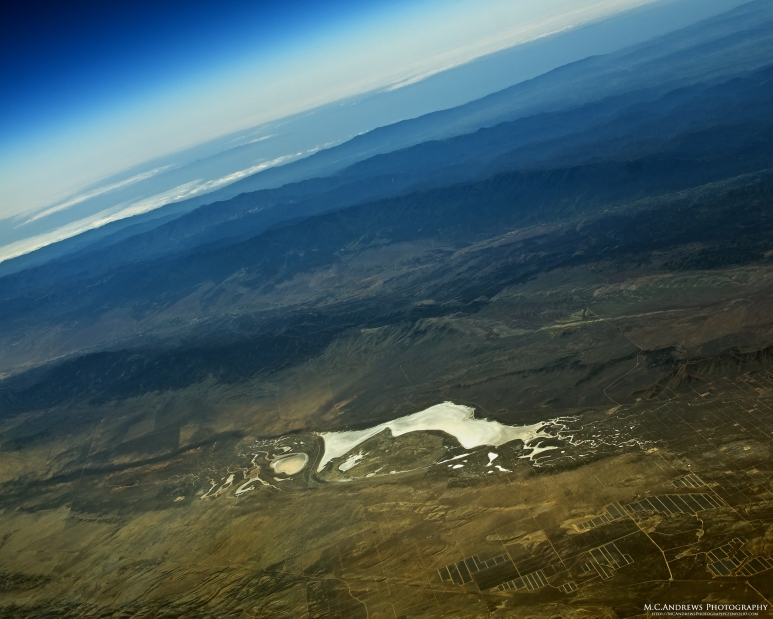
As we turn toward California’s South Coastal Range, we cross the Carrizo Plain and the plain stunningly presents the abstract etching of Soda Lake. An ancient stream once drained brackish waters from this region, until motion along the San Andreas Fault interrupted that flow and created this lake. Its white chalky surface tracing winding rivulets from streams into the landscape, a salty layer encrusts the lake and highlights its creative form and fractal pathways. As we trace these lines with our eyes, we imagine the inspiration of a thousand native designs etched into rock walls imitating the mysteries of creation.
Cloud Source

As if the source of the weather itself, smokes rises and spreads into the atmosphere from individual fires burning across the landscape of Kansas. In early Spring while the ground is still damp and the temperatures cool, controlled fires can be seen burning on farmlands throughout the south and midwest. From a distance the twisting spires of smoke look like tornadoes spiking the earth in random patterns. Their smoke columns rapidly rise, expand and diffuse into the tropopause as the smoke drifts across the landscape with the wind and its source remains anonymous.
A little fire creates a great cloud and, though only fueled by a small amount of debris, each relatively small mass of carbon burned becomes a massive cloud blanketing the earth when it is converted to a gaseous state. This is the carbon we can see…this burning is part of renewal as in a balanced cycle these fields will soon be filled with green plants producing food and oxygen…but it makes me stop and contemplate the more insidious burning we do where the gases aren’t so visible and our consumption lacks forethought and balance.
Moonrise in Twilight

On the eve of the Blood Moon, we witnessed the moon rising at sunset as we cruised at 39,000 feet. The separated bands of colored light marked the boundary of twilight as we looked through its cross-section at the rising moon. While low on the horizon, the moon loomed large as it first appeared in dusted amber through the haze of the aerial horizon and then grew smaller, sharper and more reflective as it climbed in the night sky.
[And at that moment I thought to myself, “why didn’t I pack a longer lens?”]
Lighting up the Night

As we climb out of Austin and into the face of a soft dusty orange sunset trapped between layers of cloud, flashes of brilliant light draw our attention away from the horizon. Over the wing, we see a single thunderstorm erupting in rapidly sequenced bolts of lightning that illuminate the folds of cloud from within and without. From a respectful distance, the light show is fascinating as it appears to be set to some music we cannot hear. We await the chorus and another round of lights and gradually turn back to the serenity of the sunset.
The Aerial Horizon – Photography

 The Aerial Horizon