The Aerial Horizon
Forget where your feet are and simply enjoy the view.
Serenity and Exhilaration at Eagle Nest

As we overfly Taos, New Mexico, we are presented with a clear view of Eagle Nest Lake. Nestled in high terrain east of Wheeler Peak, the lake appears as a carefully sculpted bowl that serves as a magnet for our perspective just as it draws water from the surrounding slopes into its heart. The village of Eagle Lake lies on its northern shore and seems an idyllic vantage point to experience the exhilaration of the surrounding peaks and the serenity of the lake’s glassy surface.
Reflecting on Sight – Color and Emotion

Reflecting on sight…If we were to lose it, what would we miss? We would neither miss cold or warmth, nor hard or soft, nor loud or quiet…for we could still feel those. We would miss color. As a word, it is a vague concept and, perhaps, meaningless until it is bundled with emotion.
As a visual interpretation of emotion, color connects us with the landscape…it connects us with a moment. With color, we experience a scene rather than just observing it. We feel a tingle in our flesh as our hairs stand on edge. We feel an elation that the color feeds and in that moment we feel cold, warmth, hard, soft, loud and quiet…all in one visual and emotional thought.
The landscape of the West, when captured in color, gives me that sense of elation that comes from this visual emotion. Each time I see the canyons with a slight change in perspective, a new emotion is born as if it experiencing it for the first time. Shadows and light in varied perspectives constantly create new new scenes and visual interpretations of our world and ourselves.
Zion National Park and the East fork of the Virgin River, Utah
Capitol Reef Abstract
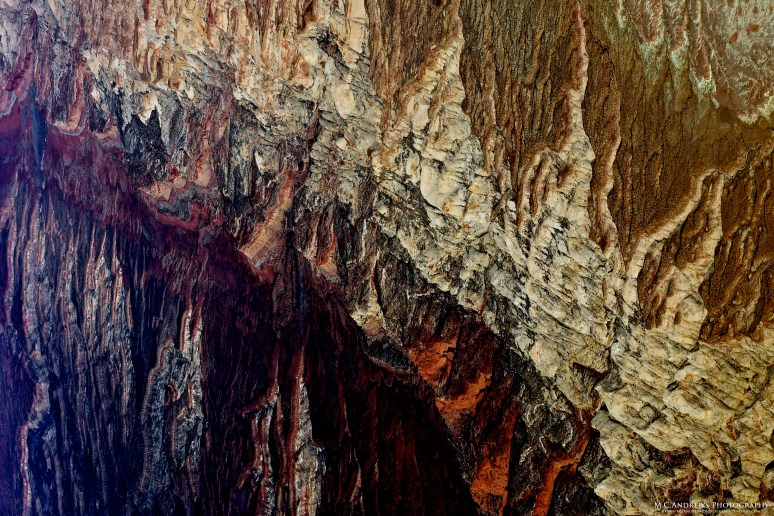
Overflying Capitol Reef, the collision of colors and textures between the white sandlike fingers of the eastern ridge and the layered red walls of the western facing cliffs create an irregular visual ripple in the landscape. Umber, orange, red, green, blue and white brush strokes on the irregular surface give depth to the one-dimensional vertical view. The closer we look, the more abstract the patterns appear. The lesson is, perhaps, that abstract art is ever-present if we simply look closely enough.
Holy Places: The Navel of the World

We first saw the Baboquivari Peak as we crossed the Salton Sea and it continued to loom on the horizon breaking the horizontal plane with its resolute vertical rise. Baboquivari Peak is located on the Tohono O’odham Indian Reservation near Papago, Arizona (west of Tucson). It is considered the most sacred place to the Tohono O’odham who regard the peak as the “navel of the world” and the home of the creator. According to their legend, it is a place where the earth opened and the people emerged after the great flood.
Odessa’s Gridded Layer

Networks of roads connecting the oil and natural gas wells around Odessa, Texas float over the natural terrain like a superimposed one dimensional layer of electronic circuitry. Tethered to the scenery by the deep pinnings of the wells, this gridded layer is otherwise disconnected from the real world of rock and soil.
Remington’s Palette
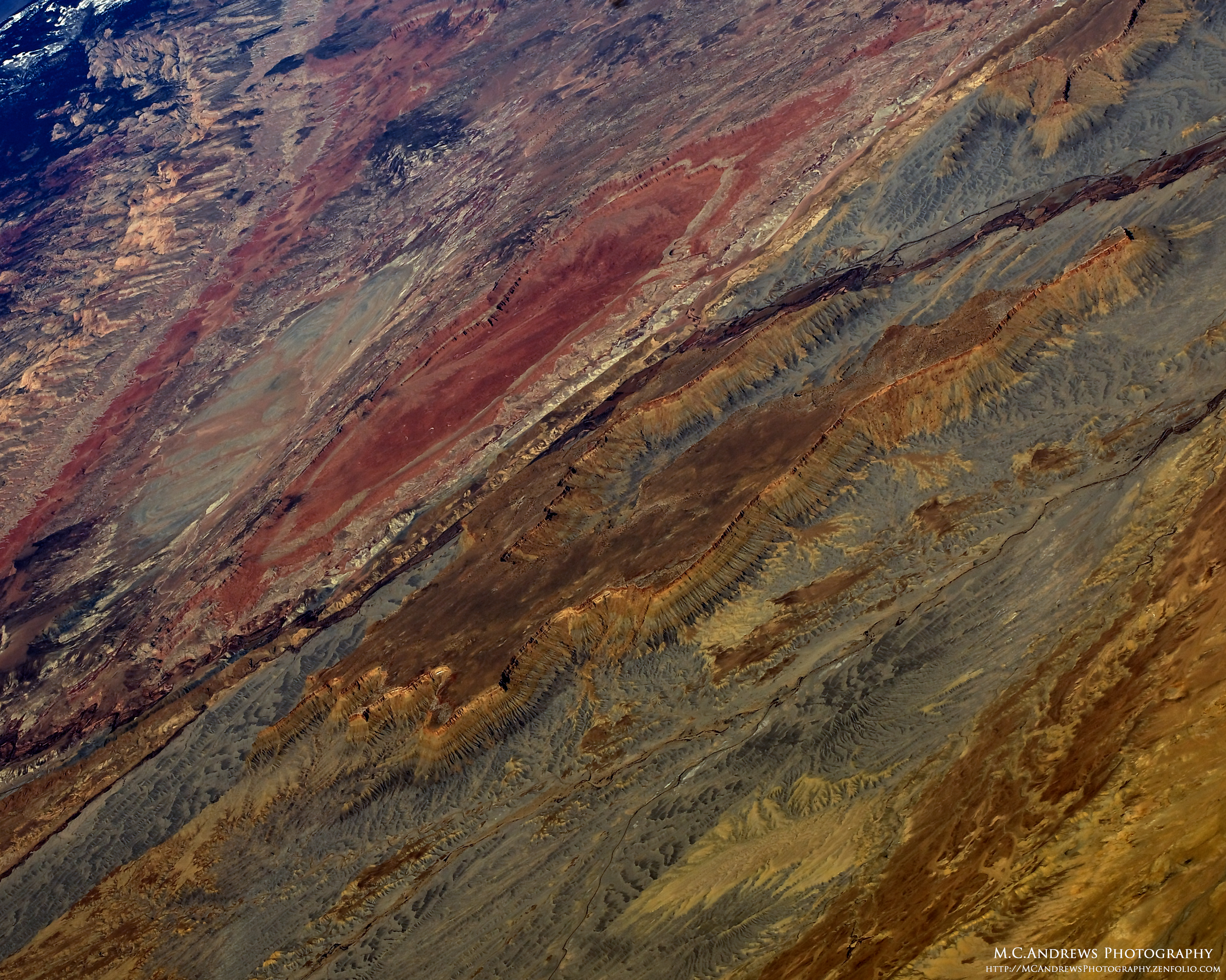
The colors of the South Cainesville Mesa and Red Desert near Capitol Reef National Park are reminiscent of the colors in a Remington pastel. The naturally occurring and dynamic palette of colors in the landscape of the American West create wondrous abstract patterns on the earthen canvas as their layers and textures are revealed in the raised lines and recessions along the mountains, mesas and desert floor.
Zion National Park – Filling the Void

As we pass the time between take off and landing, our eyes are on the horizon and we are infinitely aware of both the hazards in front of us and the beautiful landscape surrounding us. The richness of the earth’s history is displayed for us as stone faced etchings adorning its surface. For those who sit in the back of the airplane with their shades drawn, watching screens or sleeping to fill the void between departure and arrival, this artwork goes unnoticed as they reflect on their time spent crossing “the fly-over states.” The irony is that boredom comes from within, while the void is consumed by natural splendor for anyone willing to sit back, relax, and enjoy the view.
Zion National Park, Utah
Orbiting Telluride
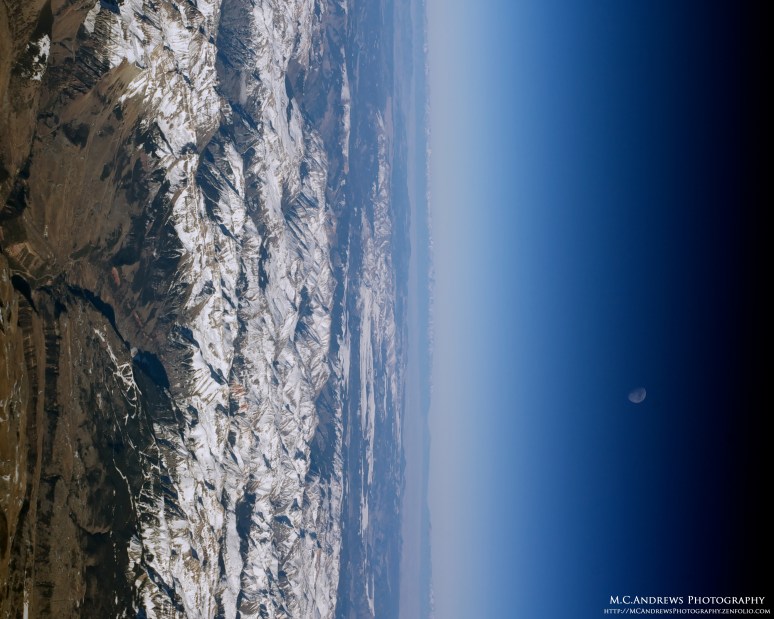
As we stare at the moon making its ascent, we appear fixed in space over Telluride, Colorado. A change in perspective yields a new interpretation of the scene as the relative motion of the moon draws our eyes away from the horizon and we no longer care about “which way is up?”
“Stepping Stones Across the Plain”
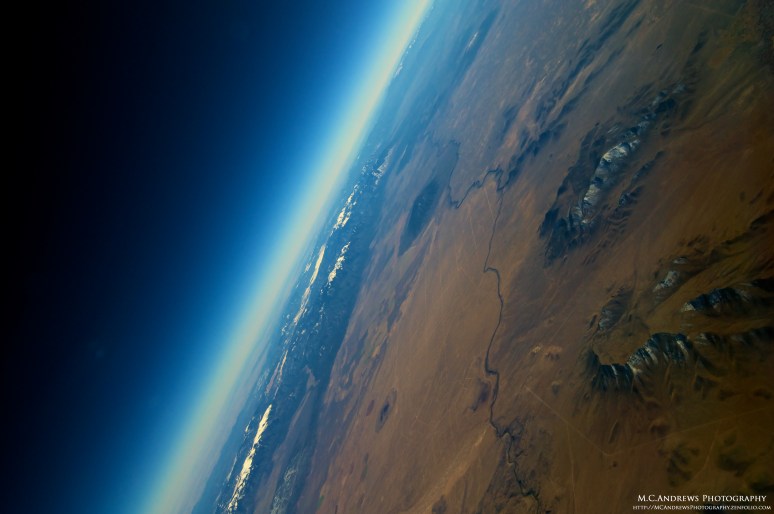
Flat Top, the Pinon Hills and Ute Mountain serve as visual stepping stones across the plain. Our eyes follow the line of the Rio Grande River as it flows southward through Colorado into New Mexico and hem stitches its way between these worn hills and spent volcanoes.
Twilight Snow
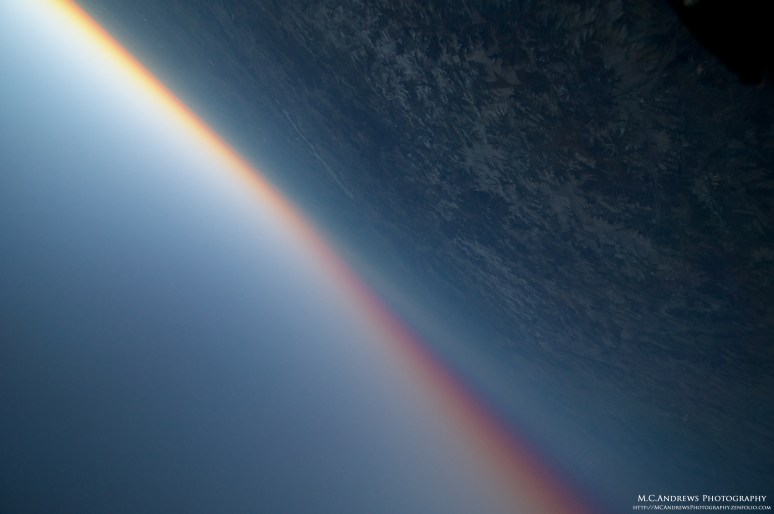
Snow frosted features of rambling terrain overwhelm the gridded patterns of farms laying fallow for winter. As the Twilight zone drags its penumbral shadow across the land, the snow is defined by the remaining luminance while the earth seems to fall away from view as it is pitted with the dark shadows of the fading day. The rainbow sherbet infused terminator in the northern sky provides our only reference to color in this darkening frozen scene.
Like Tendrils into the High Plains

The inlets and gorges that etch Lake Powell into the landscape spread and contort as they grasp the surrounding earth. Then like tendrils into the high plains that surround the lake, they reach and pull us into the canyons to the south as our eyes follow the ridges twisting their way toward the aerial horizon. These same lines seem to pin Navajo Mountain to the scene as if made cling to the earth by its colorful roots.
Round the Farm
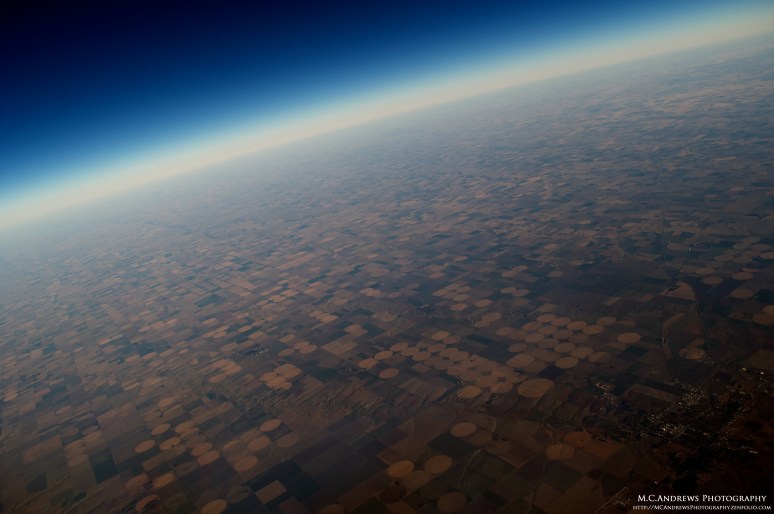
As Spring nears and we momentarily allow ourselves to dream of warmer weather sweeping across the country, my thoughts rest on Grant Wood’s painting of “Spring Turning.” The plowed geometry overlying the rolling low lands of the midwestern states warms and comforts me in these last few weeks of Winter. Flying over western Nebraska, the same smooth flowing yet constrained landscape emerges from the haze of late afternoon sun. Layer upon layer, we see the textures of the rolling terrain with the creases and cracks of hills and streams overlaid by the neatly measured grids of property lines. All this constraint is diluted by the soft shapes of circular irrigation patterns that drown out the rigid lines of order and possession. The control of the landscape creates the illusion that the landscape is a sum of its parts. As we look upward to the aerial horizon, we know better…that the earth is one…the lines and shapes are merely our tools to help our small minds consume its vastness.
Mojave: Through Another Lens
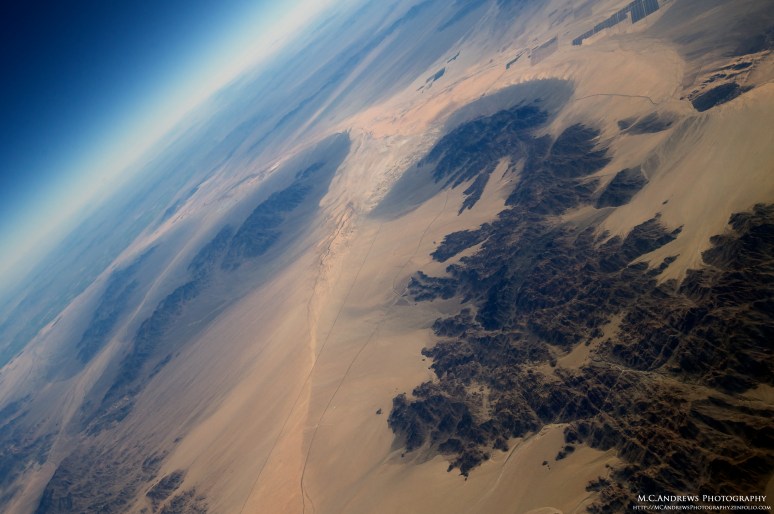
Many think of the desert as a wasteland and their imaginations contain vast planes of nothingness. But if we choose to follow the textures of the desert and to listen to its stories, the desert comes alive and the terrain guides us into the heart of something old and interesting (and perhaps even wise). Challenging ourselves to see past the bareness, we see the soul of the earth revealed and wonder at its creation.
The Canyon Revealed

As the undercast parts and The Canyon is revealed, it is as though a masterpiece has been unveiled for all the world to see. In plain words, this may sound cliche, but it is an apt description…As some artistic masterpiece is seen for the first time, the broad spectrum of emotions, thoughts, and visual stimulation may cause the senses to reel. The moment this perspective is revealed is so utterly overwhelming to the senses that words are inadequate to fully express the sense of wonder. Though millions of years in the making, the combined effect of weather, light and landscape make each unveiling appear as the first.
Winter’s Approach – A Memory
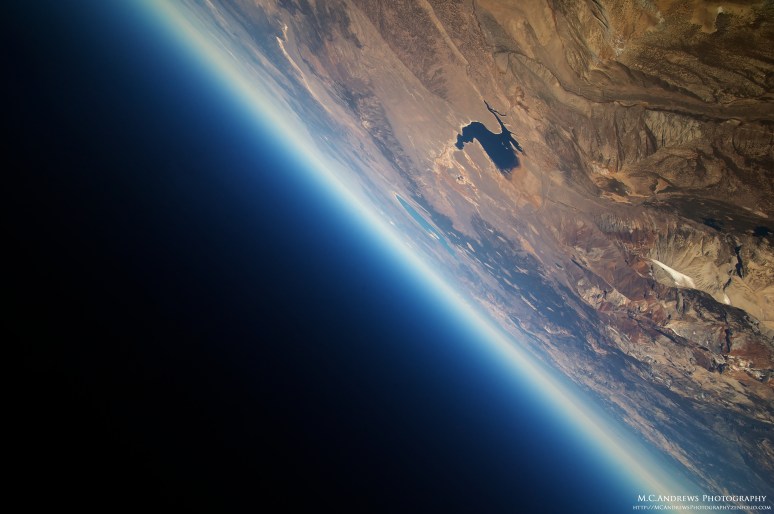
Reflecting on warmer days of autumn, our memories are as densely packed as the rippling features of the Sierras…A visual overload in blue and umber. As we round the Sierra National Forest, Lake Crowley points a finger north following a twisting stream toward its source and guides our eyes to a distant Mono Lake hovering beneath the horizon. Above Lake Davis, a smooth covering of snow on the western face of Mount Morgan provides us with a solitary sign Winter’s approach.
Turbulence Visualized
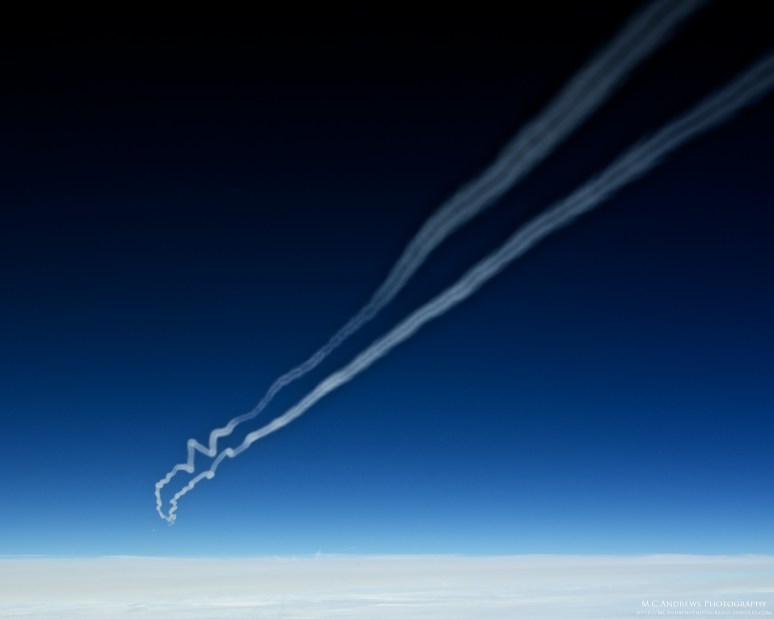
The future can best be predicted by remembering our experiences and reflecting on the traces of where we have been. Paying attention to the signs, when we witness someone else’s troubles, we can prepare for our own. Contrails normally appear in straight lines marking our disruption of the airmass as we travel through it at subsonic speeds. They gradually dissipate or fall off to lower altitudes. In this case, the erratic vertical zigzag pattern of the contrails mark a moment of moderate turbulence ahead. As we silently thank the pilots ahead, the Captain throws the Seat Belt Sign – ON.
Circling New Mexico
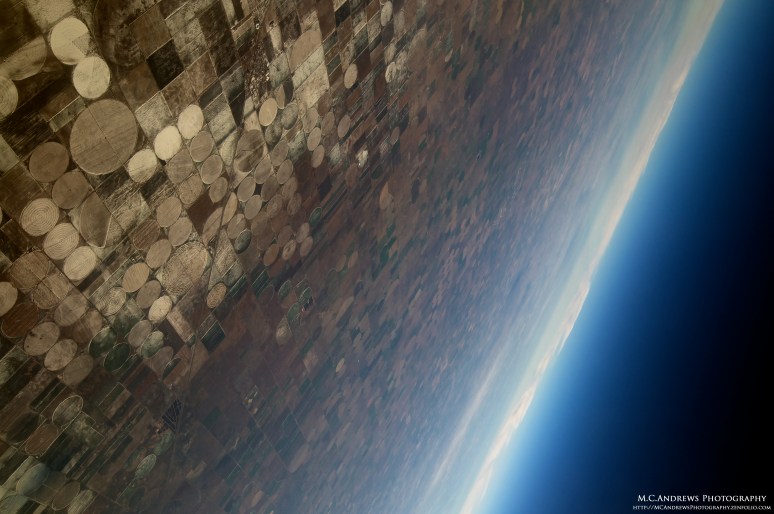
Crop circles, empty of crops, in eastern New Mexico. Their shapes are marked by the heavy circular furrows where the light snow adheres and changes the color of the landscape. Like the moire of a fabric whose pattern changes in the light, their patterns vary with the depth and density of their furrows. These shapes dominate the landscape and distort our perception of distance along the plain as they extend into the distant horizon.
Mixed Messages – White on Blue
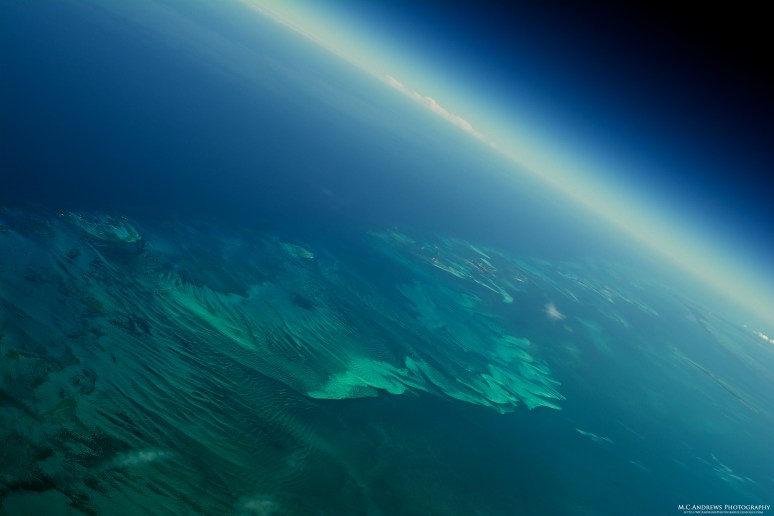
As I stare through my front window at the endless onslaught of snow, I see the blue of shadows cast through the illuminated whiteness. These colors convey a frigid message as I sit in the warmth of my home. Yesterday, those same colors conveyed a different message, one of warmth, as I sat in my cockpit at 39,000 feet where the temperature was -45 degrees Celsius. The sands along the north bank of Grand Bahama island look warm and inviting as the white reflects light from just below the surface of the Atlantic Ocean. That reflected light tempers the deep blue of the ocean with a warm turquoise hue. Two colors, two contexts, two messages…both beautiful.
To Destinations Unknown
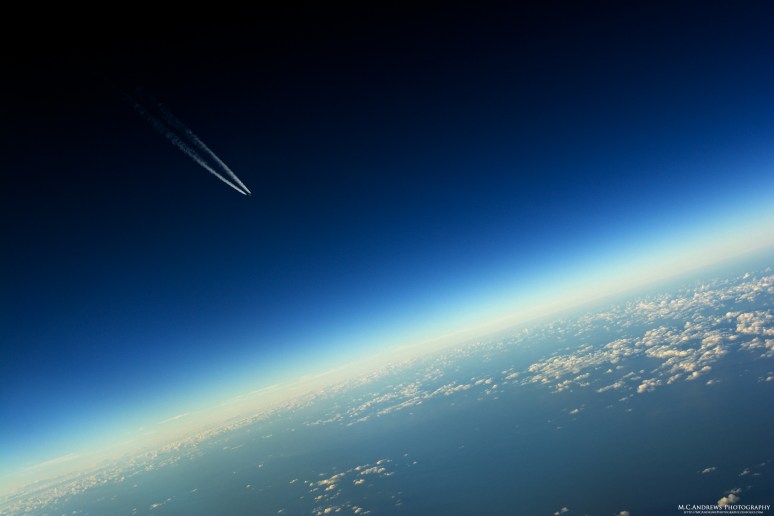
We spend so much time knowing where we are going that we assume all destinations are known. However, as we observe the ship passing overhead, backlit by the heavens and jetting into the abyss of the aerial horizon, all we can assume is that we do not share the same destination. Like following a path toward the summit of some great precipice and watching a hiker in the distance begin to fade into the haze of the sky, we wonder if he will find a cliff or a gently sloping path on the other side. Though our environs may be different, we all follow paths but we tend to get caught up in the minutiae of our own and fail to see the splendor of others following their paths so brilliantly. Their destinations are not so important as the manner in which they get there. That is something we share as we follow our paths to destinations unknown.
Flying in the Tail
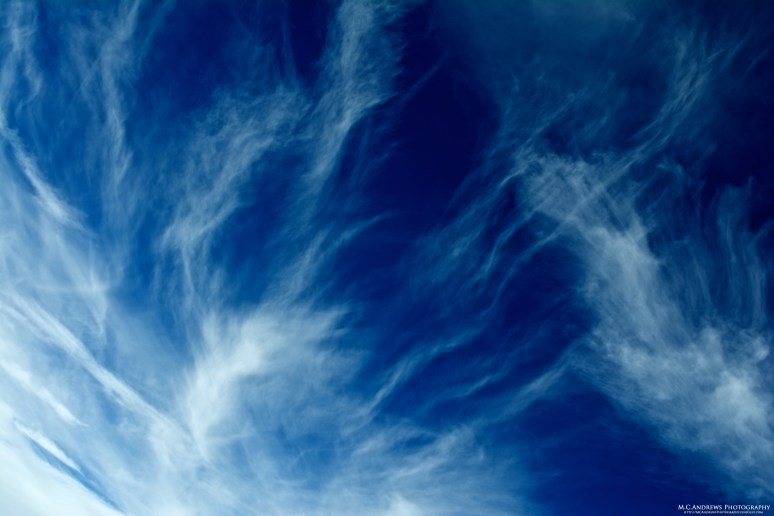
Flying in the wisp of a mare’s tail, each delicate strand of crystalized water vapor appears to flow and swirl in the unstable air. Their motion is both chaotic and harmonious. Like the hairs of a brush individually dragging the blue across a canvas of sky to achieve a uniform result. This up close look at the alto cirrus clouds gives a beautiful perspective on their delicate motion.
The Aerial Horizon – Photography

 The Aerial Horizon